
The Rural Health Transformation Program (RHTP), is a new program funded through the Centers for Medicare and Medicaid Services (CMS). It empowers states to strengthen rural communities across America by transforming the rural healthcare delivery system and improving access, quality, and outcomes. Through innovative system-wide change, this program invests in rural healthcare for future generations. Under the leadership of Governor Moore’s administration, Maryland applied for and received funding for the program.
Rural Maryland faces many health care challenges. The region has a lower life expectancy, higher rates of diabetes and heart disease, and longer travel times to access health care. Access to locally produced food will be enhanced under the Rural Maryland Council (RMC)-led components of the Maryland RHTP (MD RHTP) and contribute to a healthier rural Maryland.
“The Rural Maryland Council is happy to support the inaugural year of the Rural Health Transformation Program with grants promoting local food networks. These grants improve local distribution of healthy food in rural Maryland, where the population has pronounced health needs. Improved distribution builds access to healthy, fresh food, and MD RHTP grants will enable rural Marylanders to enjoy and benefit from local farms and healthy foods for years to come.”— Susan O’Neill, Board Chair
The RMC is working closely with the Maryland Department of Health and the State Office of Rural Health and other agencies to initiate the Empower Marylanders to Eat for Health initiatives of the MD RHTP program. Grants will enhance access for Marylanders to nutritious, locally grown Maryland foods. The RMC program uses a two tiered approach. The first tier supports food aggregation and food hubs (supply-side food aggregation). The second tier encourages institutions to purchase locally grown foods and establish delivery networks (demand-side purchasing).
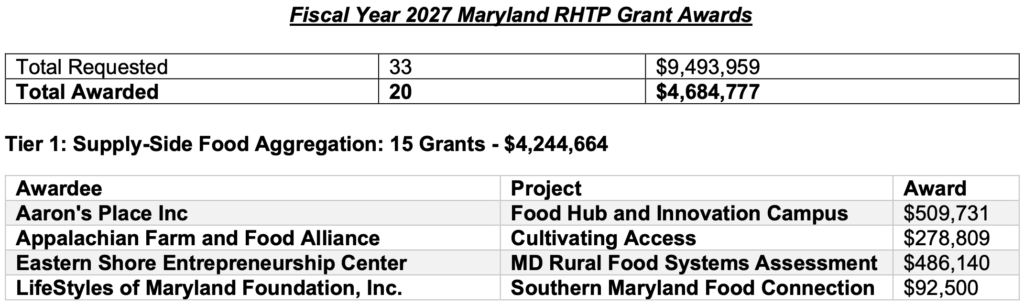
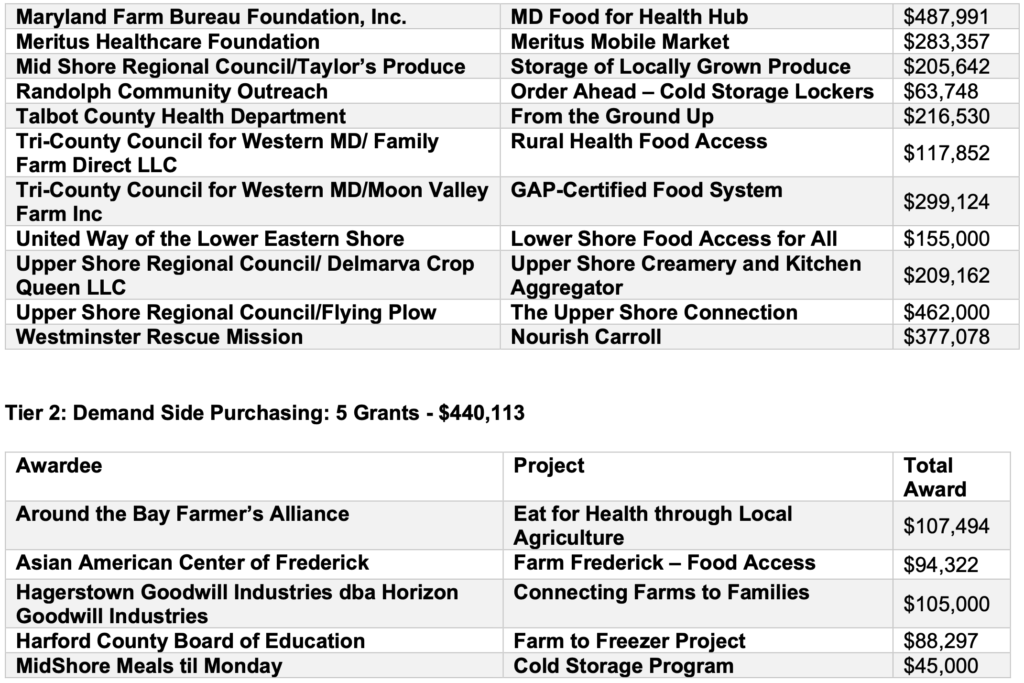
The RMC is Maryland’s federally designated rural development council and the official voice for rural Maryland. Operating under the direction of a 40-member Executive Board, RMC works to strengthen rural communities and businesses and promote greater access to economic opportunities, health care, education, and essential public services. Learn more about the grant programs, including upcoming details of the second year of RHTP funding by visiting the RMC website – rural.maryland.gov/grant-opportunities.
The Rural Health Transformation Program (RHTP) was authorized by H.R. 1 (2025) (Section 71401 of Public Law 119-21) and empowers states to strengthen rural communities across America by improving healthcare access, quality, and outcomes by transforming the healthcare delivery ecosystem. Through innovative system-wide change, the RHTP invests in the rural healthcare delivery ecosystem for future generations. On December 29, 2025, Maryland was pleased to receive a notice of award for budget period one, of five, to develop the Maryland Rural Health Transformation Program.
The success of Maryland Department of Health’s (MDH) proposal for The Maryland Rural Health Transformation Program will enable our state to strengthen and improve the health and well-being of our rural residents. Maryland’s program details three areas of transformation to significantly impact rural health: (1) Transform the Rural Health Workforce, (2) Promote Sustainable Access and Innovative Care for Rural Marylanders, and (3) Empower Rural Marylanders to Eat for Health. Each focus area highlights opportunities for: near-term Immediate Impact Funds and longer-term Transformation Funds. The Rural Maryland Council will manage the Pillar 3 Transformation Funds of the Maryland RHTP on behalf of the Maryland RHTP. For more information visit: https://health.maryland.gov/pophealth/Pages/Rural-Health-TransformationProgram.aspx
The Maryland Rural Health Transformation Program is supported by the Centers for Medicare and Medicaid Services (CMS) of the U.S. Department of Health and Human Services (HHS) as part of a financial assistance award totaling $168,180,837.61 with 100 percent funded by CMS/HHS. The contents of this release are those of the authors and do not necessarily represent the official views of, nor an endorsement, by CMS/HHS, or the U.S. Government.