
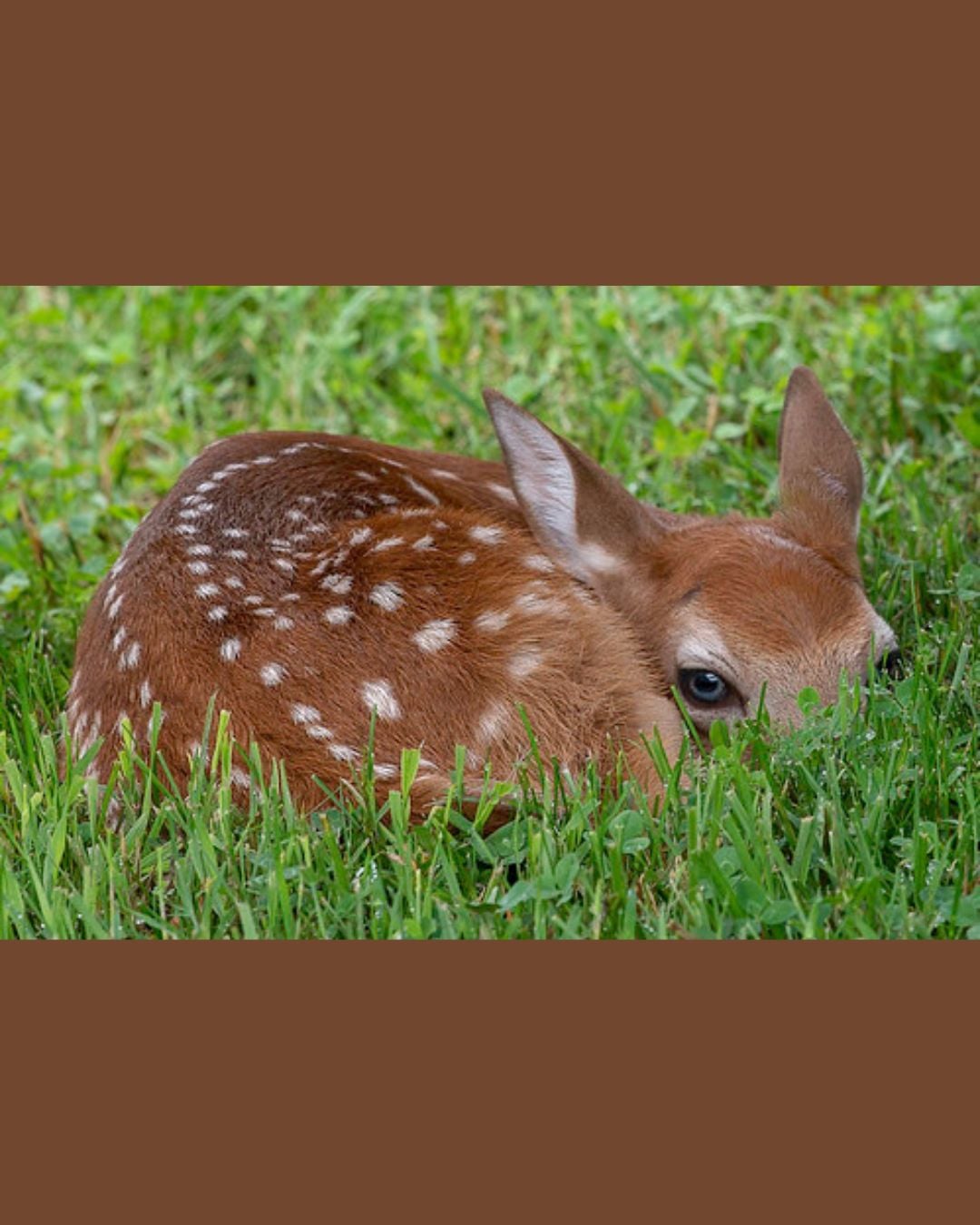
The Maryland Department of Natural Resources cautions anyone who encounters a fawn to avoid disturbing it and resist the urge to feed or handle it.
Removing deer from the wild and keeping them in captivity is against the law in Maryland in order to protect animal welfare and ensure public safety. Even if no adult deer are seen, the fawn’s mother is likely near, and the fawn requires no assistance.
Deer are born with specialized physical and behavioral adaptations, which have helped their species survive for ages. Born in late spring, fawns instinctively lie motionless when approached by potential predators, relying on their adaptations to help them hide. Their virtual lack of odor, natural camouflage (reddish-brown and spotted coat), and freezing behavior help them avoid danger. These adaptations serve them well, as evidenced by the abundance of deer across Maryland’s varied landscapes.
Despite this effective strategy, inquisitive fawns will sometimes explore new surroundings and may appear to be lost or orphaned. There is usually no need for human intervention since in most cases, the doe is nearby foraging and will return to nurse the fawn when it is safe.
“While people often mean well, ‘rescuing’ fawns usually does more harm than good. Taking a fawn from its natural habitat, under the mistaken belief that it’s orphaned, often leads to stress, injury, or malnutrition for the fawn,” said DNR Wildlife and Heritage Service Director Karina Stonesifer. “Beyond risks to the fawn, removing fawns from the wild creates safety and health hazards for humans, especially as the fawn grows. To keep fawns safe and healthy, leave them alone and let them stay wild.”
More information on fawns and how to handle an encounter with them can be found on the Maryland Department of Natural Resources Wildlife and Heritage Service website.
Anyone with questions about fawns or other young wild animals is encouraged to call the state’s wildlife hotline at 877-463-6497.