
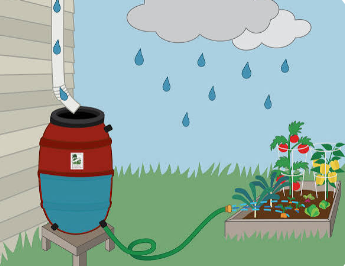
A stormwater management program launched in 2021 through the Deep Creek Watershed Foundation is continuing to make a positive impact across Garrett County. Through its Rain Barrel Education and Distribution Program, the foundation has provided 375 free rain barrels to local residents over the last few years.
The program combines equipment distribution with practical environmental education. Each person who receives a barrel must complete an in-person or virtual training session provided by the University of Maryland Extension. The training covers stormwater management, proper barrel installation, routine maintenance, and the safe, effective use of captured rainwater.
Rain barrels provide a practical way to slow stormwater at its source. A typical rain barrel holds 50 to 60 gallons. Using an estimated capacity of 55 gallons per barrel, the 375 barrels distributed through the program could temporarily capture as much as **20,625 gallons of rooftop runoff each time they fill**—before the water is used or infiltrated.
The environmental benefits can extend beyond the individual properties where the barrels are installed. Reducing rooftop runoff can help decrease flooding and erosion, as well as the movement of nutrients, sediment, and other pollutants into streams and rivers. Captured rainwater can also replace some potable water used for lawns, gardens, and other outdoor activities, reducing demand on public water supplies and private wells.
Research also shows the value of pairing rain barrels with other stormwater practices. In a 2023 peer-reviewed study that used the U.S. Environmental Protection Agency’s Storm Water Management Model, 200-liter rain barrels—about 53 gallons—reduced modeled flood volume by 0.93% during a short, intense storm and 4.86% during the first peak of a longer storm when used alone. When rain barrels were combined with rain gardens, modeled flood volume decreased by 29.26% during a short-duration storm. During two peaks of a longer storm, the combined system reduced flood volume by 36.36% and 30.88%, respectively. The combined system also delayed the first peak of stormwater runoff by approximately 10 to 20 minutes.
The study found that rain barrels are most effective when they are emptied between storms and paired with an infiltration practice, such as a rain garden. A rain barrel alone stores and slows water; it does not automatically cause all captured water to soak into the ground. Infiltration occurs when water is used, released through a properly designed overflow, or directed to a suitable rain garden or other infiltration area. Once a barrel reaches capacity, its ability to reduce additional runoff is limited.
In 2026, the program expanded its impact by distributing 300 native plant plugs to residents who participated in the rain barrel program. The native plants are intended to encourage participants to take the next step in creating habitat that can help slow erosion, improve water infiltration and support local wildlife. When planted in appropriate locations, native vegetation can complement rain barrels by helping retain and soak in stormwater on the landscape.
By combining free equipment, native plants and required training, the Deep Creek Watershed Foundation and University of Maryland Extension are helping residents take practical steps to manage stormwater at home and protect the Deep Creek watershed. The program’s continued reach demonstrates the value of pairing community resources with science-based environmental education.
Register for Information for 2027 Rain Barrel Distribution