At Broad Ford School, we are building a culture where both teachers and students are becoming confident thinkers, problem solvers, and leaders in learning. Teachers across grades K–6 are embracing strategies from Building Thinking Classrooms in Mathematics to create learning experiences that encourage students to think deeply, collaborate, persevere, and take ownership of their learning.
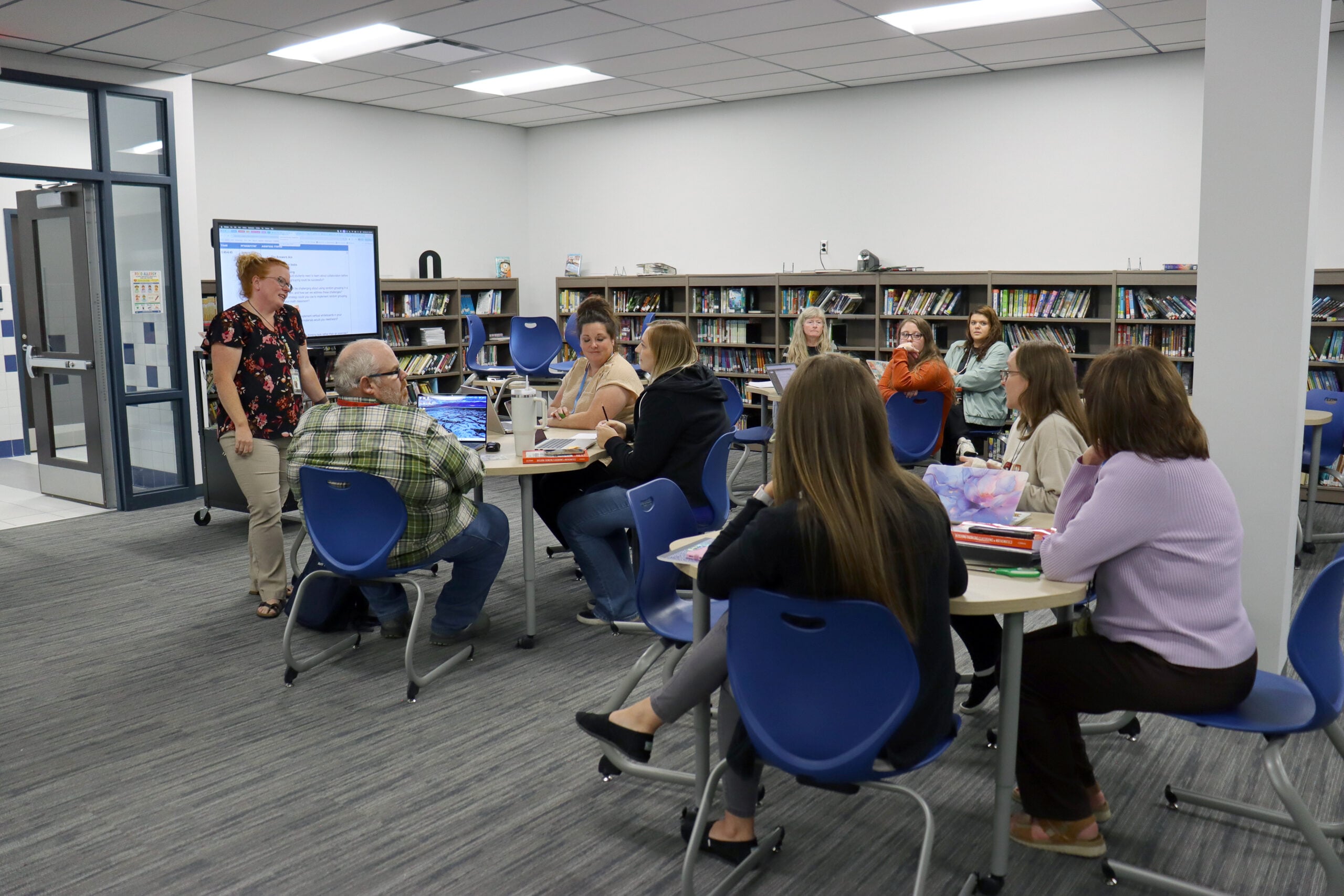
This work is also creating teacher leaders. Through professional development, a Building Thinking Classrooms book study, and ongoing collaboration, teachers are learning new ways to engage students in meaningful mathematics. They are not simply learning new strategies—they are trying them, reflecting on what they notice, sharing their experiences with colleagues, and helping one another implement effective practices across classrooms. Teachers are becoming leaders in their own professional learning and contributing to a schoolwide culture where educators learn from one another.
Through professional learning and collaboration, teachers are exploring strategies such as:
- Helping students discover and compare multiple ways to solve problems
- Asking questions that support student thinking without interrupting a student’s train of thought
- Moving beyond traditional exercises to engaging, thinking-rich tasks
- Creating productive collaboration through purposeful grouping
- Using non-curricular tasks that spark curiosity and pull students into the learning
- Helping students apply new strategies and thinking processes to future problems
- Creating classrooms where students explain, question, collaborate, and persevere
- Reflecting on classroom experiences and sharing successful strategies with colleagues
One of the most visible examples is the use of vertical non-permanent surfaces, such as whiteboards, where students work together to solve challenging problems. Rather than sitting passively and completing a worksheet, students are asked to stand, think, discuss, represent their ideas, make mistakes, revise their thinking, and explain their reasoning.
These experiences shift the role of the student from simply receiving information to actively leading their own learning. Students learn that there may be multiple pathways to a solution and that their ideas, questions, and reasoning matter. They are challenged to take risks, listen to others, defend their thinking, and persevere when a problem is difficult.
At the same time, our teachers are taking ownership of their own learning. They are trying new strategies, learning from one another, discussing what works, and bringing successful practices back to their classrooms. This creates a powerful cycle of professional growth: teachers learn, teachers try, teachers reflect, teachers share—and students benefit.
The goal isn’t simply to find the right answer. It is to empower teachers to lead their professional learning and students to lead their own learning. At Broad Ford School, we are growing a community of educators and learners who think deeply, collaborate, take risks, solve problems, and believe that every day is a chance to grow.
That’s the power of a thinking classroom at Broad Ford School and across GCPS.