



DEEP CREEK LAKE BEAR AWARENESS GUIDE
Deep Creek Lake is home to beautiful forests, peaceful mountain views, and a growing population of black bears, especially in Garrett County. While sightings can be exciting, it’s important to remember that bears are wild animals and a natural part of the environment we share. Whether you’re a resident or visiting the area, taking a few simple precautions can help keep both people and bears safe. Bears are highly food-driven, and unsecured trash or food can attract them into neighborhoods.
This guide highlights ways to prevent conflicts, provides resources to address bear-related concerns, and encourages community efforts to help keep bears wild and people safe.
LIVING WITH BLACK BEARS
SOLVING BEAR PROBLEMS
People share in the responsibility to avoid conflicts with bears. The best way to avoid bear problems is to take precautions to not attract them in the first place.

Bear Wise helps people live responsibly with black bears.
AT HOME BASICS
#1 NEVER FEED OR APPROACH BEARS
Intentionally feeding bears or allowing them to find anything that smells or tastes like food teaches bears to approach homes and people looking for more. Bears will defend themselves if a person gets too close, so don’t risk your safety and theirs!
NEVER APPROACH BEARS

Photo by Mitch Adolph, submitted to Maryland DNR 2023 Photo Contest.
If black bears feel nervous, they may clack their teeth together (sounds of a black bear huffing and popping), moan, blow, huff, or stomp the ground. A bear might stand up to get a better look at whatever is bothering them. If they are highly agitated and fearful, they may bluff charge (run toward you and then stop before reaching you).
These are all ways the bear is showing you it is uncomfortable with the situation, and it wants you to give it some space. These are NOT indications of aggressive intent or that an attack is about to happen.
- If you see a bear far away, leave it alone.
- Enjoy bears from a distance and don’t take selfies.
- There are many types of bear encounters, and your behavior may determine the outcome of an encounter.
Truly predatory or aggressive black bears are extremely rare. But if you do encounter a black bear that is approaching you quietly with intention, and it attacks you, FIGHT BACK!
NEVER FEED BEARS
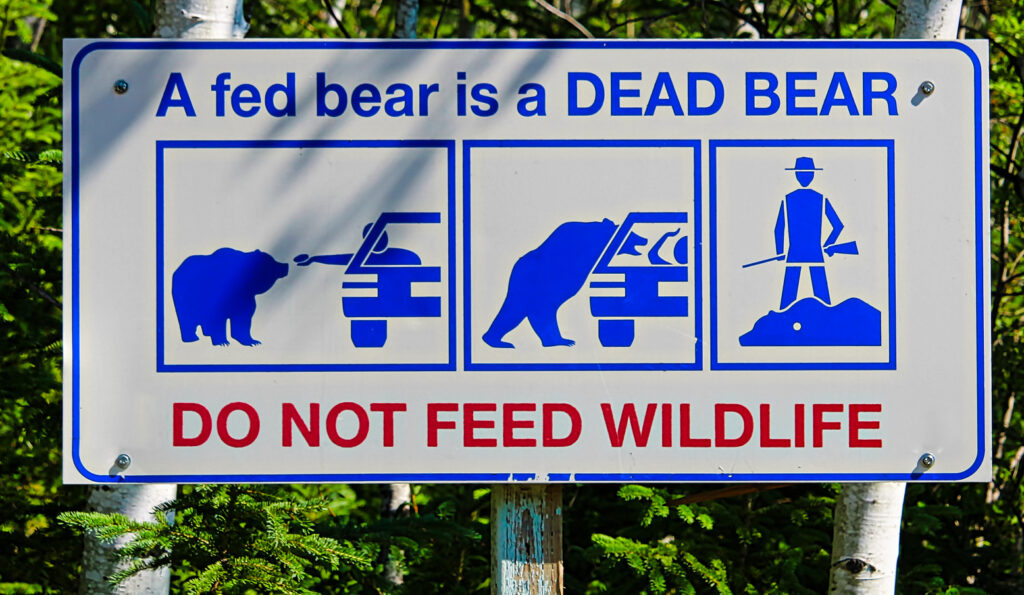
Do not feed roadside, park or neighborhood bears! You may think that feeding a bear will encourage bears to appreciate you or other humans. But bears don’t see it that way.
- Feeding bears includes “unintentional” feeding, such as allowing bears to get into bird feeders, barbecue grills and pet food.
- If you see anyone feeding black bears, report the incident to authorities before the bear becomes a problem for everyone.
A fed bear does learn something from getting fed. It learns to overcome its instinctive fear of humans. In essence, feeding bears “rewards” bears for approaching people in the same way a treat rewards a dog for coming on command.
#2 SECURE FOOD, GARBAGE AND RECYCLING
It’s all food to a bear!
A bear’s strongest sense is smell. They can pick up a scent from over a mile away! That is more than seven times better than a bloodhound. Food and food odors attract bears, so don’t reward them with easily available food, liquids, or garbage.
SAFETY FOR YOU, YOUR NEIGHBORS, AND THE BEARS
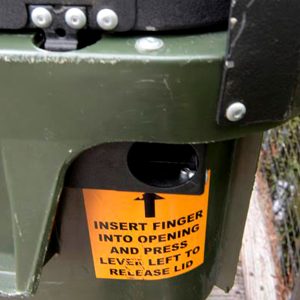
If you and your neighbors keep your food and garbage secure from bears, you will go a long way toward keeping bears in the wild and out of your neighborhood. We urge you to follow this list of simple precautions.
1) Human foods, from picnic lunches to spilled snacks on the ground, can easily attract bears. Never leave human foods outside unattended. Pick up all leftovers and bring them inside.
2) Garbage and recycling should be stored where bears can’t smell or have access to it: either in a bear-resistant container or inside a bear-resistant building.
- Haul garbage and recycling to an approved disposal site as often as possible, but at least once a week to avoid the buildup of odors.
- Garbage and recycling pick-up? If you have garbage pick-up once or twice a week, put your cans on the curb the morning of pick-up, never the night before.
3) Composting: The safest way to compost in bear country is to create your compost pile inside an electric fence or use one of the many available bins, tumblers, or outdoor containers meant to keep odors in and bears out.
#3 REMOVE BIRD FEEDERS WHEN BEARS ARE ACTIVE
Birdseed and grains have lots of calories, so they’re very attractive to bears. Removing feeders is the best way to avoid creating conflicts with bears.
DON’T “REWARD” BEARS FOR COMING INTO YOUR YARD
Wild black bears are normally shy of humans and will stay away from people and their residences. However, readily accessible bird seed “rewards” bears for overcoming their natural fear of humans and makes them likely to return.
Even if a bear can’t reach your feeder, the sight and smell will still attract them. Bears have been seen sitting under feeders for hours, trying to figure out how to get them down. While they’re thinking, they may look around to see if there’s anything else interesting at your place. Be extra vigilant and make sure you’ve thoroughly bear-proofed your home, garage, and property.
#4 NEVER LET PET FOOD OUTDOORS
Feed pets indoors when possible. If you must feed pets outside, feed in single portions and remove food and bowls after feeding. Store pet food where bears can’t see or smell it.
Never leave food out for stray dogs and cats.
#5 CLEAN AND STORE GRILLS
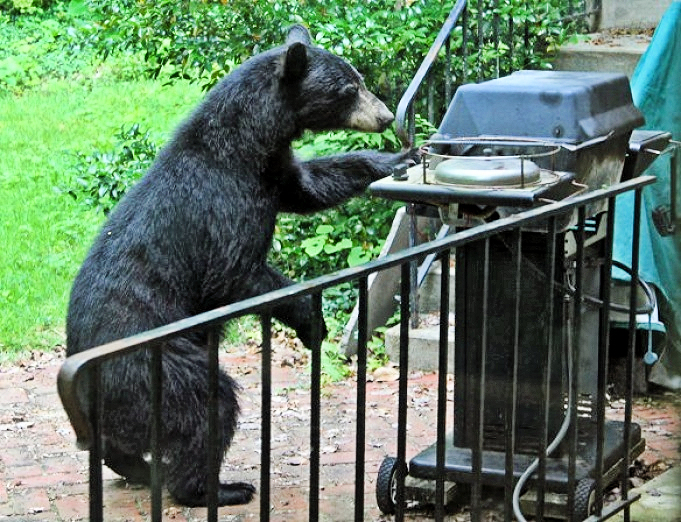
Photo: Get Bear Smart Society
Clean grills after each use and make sure that all grease, fat, and food particles are removed. Store clean grills and smokers in a secure area that keeps bears out.
#5 ALERT NEIGHBORS TO BEAR ACTIVITY
See bears in the area or evidence of bear activity? Tell your neighbors and share information on how to avoid conflicts with bears. Bears have adapted to living near people; now it’s up to us to adapt to living near bears.
DON’T GIVE A “TRAVELING” BEAR AN EXCUSE TO LINGER IN YOUR NEIGHBORHOOD
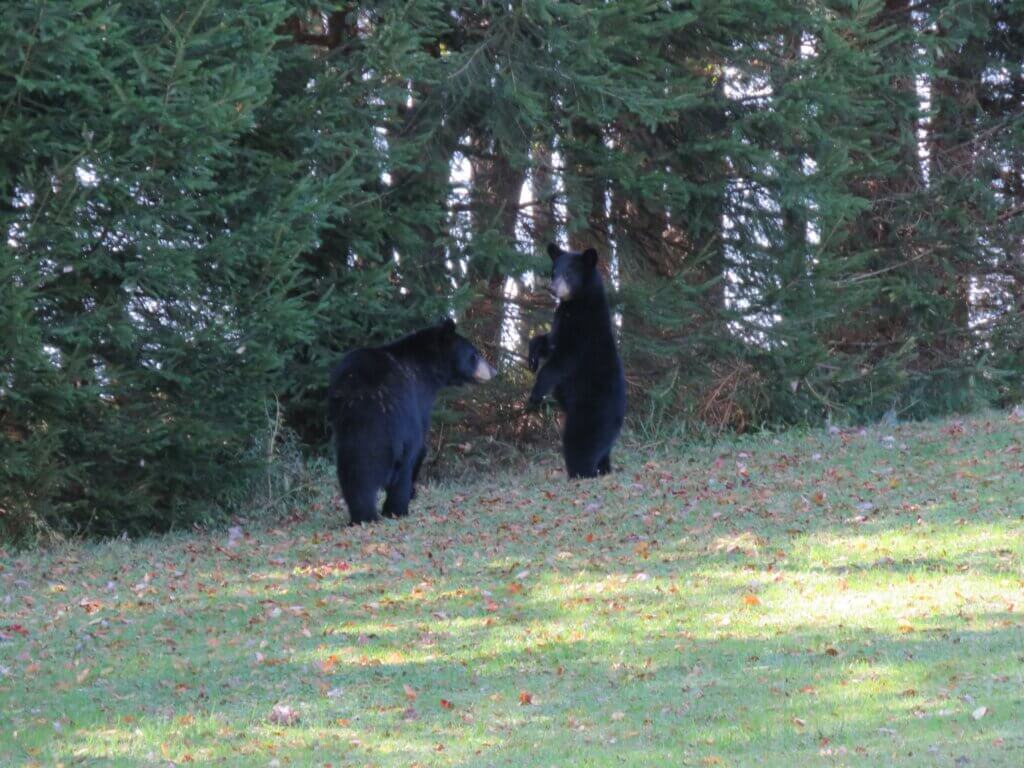
Photo from Deb Swiger (Deep Creek Lake, MD).
Bears travel across roads and through rural areas to find their natural foods in another forest area. You may be more likely to see them around your house during years when their natural foods are less available.
However, when bears start hanging out around homes, both residents and bears face problems. Once a bear spends more of its time in a neighborhood, its chances of survival drop.
BEAR SAFETY TIPS: HIKING, CAMPING, FISHING AND HUNTING
Spending time hiking, walking, camping, cycling, or fishing in bear country requires a few extra precautions. Although bear attacks are rare and black bears are not typically aggressive, it’s best to avoid encounters whenever possible.
Follow the simple tips below to stay safe and be prepared if you do come across a bear.
HIKING OR WALKING
- Be aware of your surroundings.
- Hike in groups and stay together.
- Keep kids within sight.
- Keep dogs on a leash or leave them home.
- Make noise in thick cover.
- Carry bear spray.
WITH YOUR DOG
- Keep dogs leashed.
- Do not let dogs chase or interact with bears.
- If you encounter a bear while with your dog, back away and leave the area.
CAMPING
🏕 Keep Your Camp Clean
- Store food, trash, and toiletries in bear-resistant containers or a locked vehicle
- Never keep food or scented items in your tent
- Cook and dispose of waste away from your sleeping area
🚫 Avoid Attracting Bears
- Do not burn or bury food scraps
- Use airtight containers and rinse recyclables
- Remove all garbage and fish remains every evening
- Use low-odor foods like canned or dried items
📍 Be Aware of Your Surroundings
- Move campsites if you see fresh bear signs
- Keep pets on a leash at all times
⚠️ If a Bear Enters Camp
- Never feed the bear
- Make loud noises (yell, bang pans) to scare it away
- Keep a safe distance and give the bear an escape route
🛡 Stay Prepared
-
- Carry bear spray for emergencies
- Remember: aggressive sounds or bluff charges mean you are too close
FISHING & HUNTING
- You are more likely to encounter bears when moving quietly and traveling early and late in the day when bears are most active.
- Follow tips for hiking and camping safely.
- Carcasses, gut piles, and bait may attract bears.
- If a bear beats you to catch or kill, don’t try to reclaim it; leave the area when it is safe to do so.
TO REPORT BEAR RELATED EMERGENCIES, CALL 1-410-260-8888
If you have persistent bear problems or want more information on bears, contact your local DNR Wildlife & Heritage Service office or one of the offices listed below.
Maryland Department of Natural Resources
Wildlife & Heritage Service
Tawes State Office Building
580 Taylor Avenue
Annapolis, MD 21401
Telephone: 410-260-8540
Toll-free in Maryland: 1-877-620-8DNR, follow the prompts to reach Wildlife and Heritage Service
TDD: 410-974-3683
Wildlife Service Offices – Western Maryland
Garrett County
Mt. Nebo Wildlife Management Area
1728 Kings Run Road
Oakland, MD 21550
301-334-4255
Western Regional Office (Allegany County)
12512 N.E. Pleasant Valley Rd
Cumberland, MD 21502
301-777-2136
Washington & Frederick Counties
Indian Springs Wildlife Management Area
14038 Blairs Valley Road
Clear Spring, MD 21722
301-842-2702
Wildlife Service Office – Central Region
(Baltimore, Carroll, Cecil, Howard, Harford, and Montgomery counties and Baltimore City)
Central Region Main Office
3740 Gwynnbrook Ave.
Owings Mills, MD 21117
410-356-0941
This information is from BearWise and the Maryland Department of Natural Resources.